
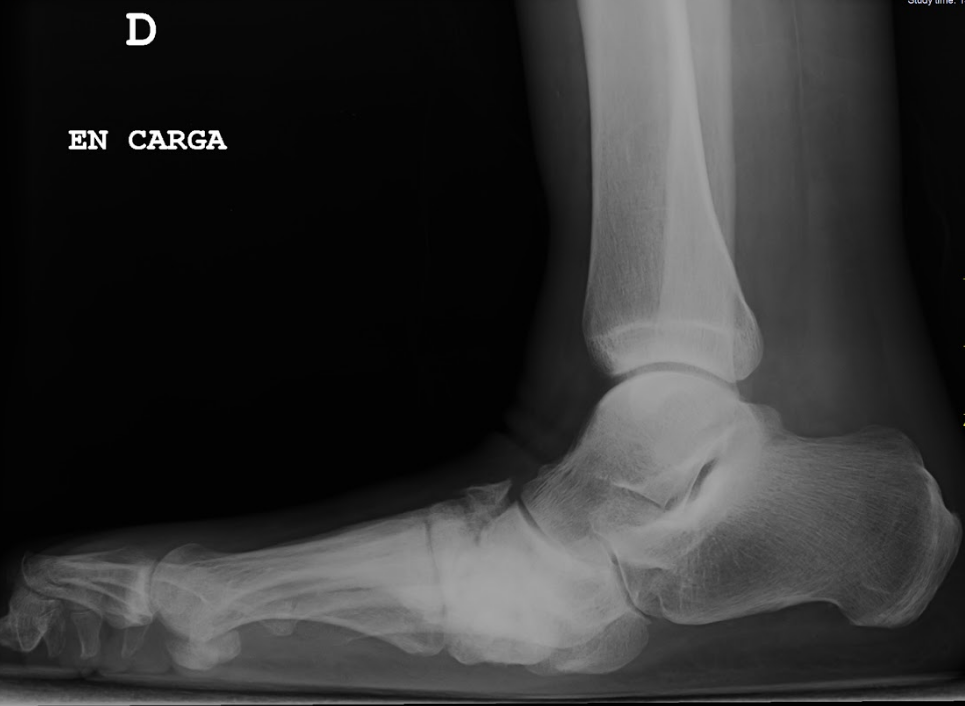
Charcot foot is a diabetic osteoneuropathy that is easy to miss. A hot, swollen neuropathic foot is not “just cellulitis” until proven otherwise.
Charcot neuroarthropathy of the foot is a serious complication, especially in people with diabetes and neuropathy. It has been described in a relevant fraction of those who already have neuropathy; about a third of those affected may have trouble in both feet. In podiatry the challenge is not to quote a textbook name: it is not to let a hot, swollen, at-risk foot pass as “just a skin infection” or a trivial sprain.
Most patients have long-standing diabetes and uneven control when joint breakdown and bone loss start to deform the foot. True numbers may be higher, because the acute phase mimics cellulitis and the chronic phase looks like osteomyelitis, both common in the diabetic foot. Without pain to raise the alarm, people arrive late.
What it is and what triggers it
Charcot foot often starts with microtrauma that, in a neuropathic foot, sets off uncontrolled inflammation. A high BMI and long-standing diabetes are associated. Pro-inflammatory cytokines favour bone and joint destruction: the foot may fracture or the arch collapse into a rocker-bottom. It is hot, swollen, often dry, and pain may be missing precisely because of neuropathy.
Up to half of people recall a sprain, a knock or a previous procedure on the foot. Another pathway is muscle imbalance that loads the foot over and over, with microfractures, ligaments that give and bone that degrades. You do not need a spectacular accident: sometimes everyday life on a foot that no longer warns is enough.
How diagnosis is approached
The history is the first filter: type and duration of diabetes, known neuropathy, previous ulcers, footwear, and whether the foot “has changed shape”. In someone with neuropathy, no previous ulcer, and a swollen, hot, red foot, the chance of Charcot is high and we act as such until proven otherwise: off-load, do not “see tomorrow”.
Plain X-ray can be late to bone-marrow oedema; MRI is more sensitive, but oedema also appears in arthritis, gout or infection. Imaging is not read in isolation. If there is already an ulcer, bone infection and neuroarthropathy sometimes have to be separated in a hospital pathway. The podiatrist does not replace endocrinology or surgery when the case leaves the consulting room; they must recognise the picture and not puncture, not pare blindly and not send the person walking “a bit to get the swelling down”.
Stages and what is done
In early stages the aim is to immobilise and keep weight off the limb to slow deformity. That may mean a total-contact cast or an off-loading device depending on resources and stage, always with a medical plan. In later stages a plantar ulcer may appear because of the new loading pattern: then we prioritise off-loading and dressings. In extremes, bone surgery is considered, outside a one-off clinic gesture.
When the foot has stabilised, footwear and orthoses try to spread pressure over a shape that is no longer the original. A chronic Charcot foot is not “fixed” with a supermarket insole. Follow-up is long: the other foot is also at risk.
If you have diabetes
Prevention remains regular appointments, the glucose control your doctor has set, and not playing down a foot that is “hot but does not hurt”. If you notice swelling, warmth, redness or a change in shape, book at Podología Priego and tell your medical team the same day if the foot worsens or there is fever. A visit that feels excessive is better than an arch collapse that is hard to walk back from.
Warning and prevention. Charcot foot is a relative emergency: it needs medical assessment and off-loading, not self-medication.
General information: this does not replace an individual podiatry assessment.
Back to journal
Comments
No comments yet.
Leave a comment
Your comment will be reviewed before it appears.