
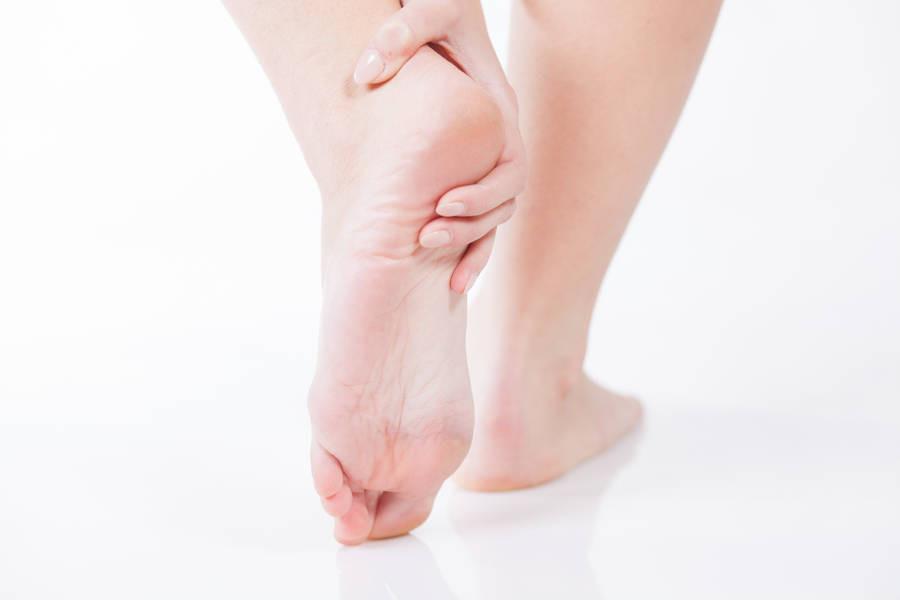
Heel pain in active children between about 9 and 13 is often Sever’s disease. Relative rest, stretching and the right support usually help.
My child is limping, will not play and complains of heel pain. It is one of the most common sentences in clinic when a boy or girl who was recently very active stops putting the heel down or avoids the playground. Heel pain is one of the paediatric reasons we see most in podiatry, especially at school age and in early teens who jump and run almost every day.
At Podología Priego we see all ages. Paediatric reviews are the backbone; looking at the foot, the school shoe and the sport shoe as well adds information when there is pain or a gait pattern that worries you. This is not about medicalising growth: it is about not leaving a child limping “until it passes”.
Why the heel hurts at that age
Before about seven, heel pain is less common: plantar fat still cushions the calcaneus. As the foot takes shape and that pad thins, the heel bone is more exposed to impact and to pull from the Achilles tendon.
Between 9 and 13, especially in children who train football, basketball, athletics or dance, Sever’s disease is common: inflammation of the calcaneal growth plate. The back relates to the Achilles; the front to the plantar fascia. Pain can start suddenly and limit sport or even walking out of school.
Two classic mechanisms: the Achilles pulls on a growth cartilage that has not yet fused, or repeated microtrauma under the heel from jumping, a very flat hard sole, or a shoe that is already spent. A change of surface (track to tarmac) or a month with extra matches also counts. Not every heel pain is Sever’s: we examine so as not to miss bursitis, fasciitis, a stress fracture or a problem that is not mechanical.
What can be done
The plan is individual. In general we combine relative rest from the gesture that hurts, ice after exercise if tolerated, gentle stretching of the posterior chain and, above all, support that limits the painful heel motion. Anti-inflammatories, if they are appropriate, are indicated by whoever is responsible for age and context; they are not the only treatment and not a “so they can play on Saturday”.
- Stretching, taught properly, reduces some Achilles pull on the growth cartilage. Done badly or aggressively, it irritates more.
- School and sport shoes are looked at for real: heel counter, size, sole. Sometimes the first gesture is retiring a dead pair, not making a device.
- If needed, a custom orthosis cushions and controls the heel. It can be designed with a football boot, a dance shoe or another sport in mind, not for a single shop-window pair.
Absolute rest for weeks is not always realistic or needed; removing the gesture that reproduces the pain (jumping blocks, daily matches) while treating is. Return to sport is agreed with the family: pain the next day is information, not cowardice.
When to book
If pain does not settle with a few days of common sense, if the child limps, avoids the heel, or the story does not fit (night pain, fever, one side that does not improve), book via contact and, if there are red flags, see paediatrics as well. You do not have to wait for it to “grow out”: that stage can be accompanied so it hurts less and after-school sport is not lost to an ignored heel.
Children’s heel pain is assessed in clinic. This text does not replace paediatrics or recommend medicines online.
General information: this does not replace an individual podiatry assessment.
Back to journal
Comments
No comments yet.
Leave a comment
Your comment will be reviewed before it appears.